
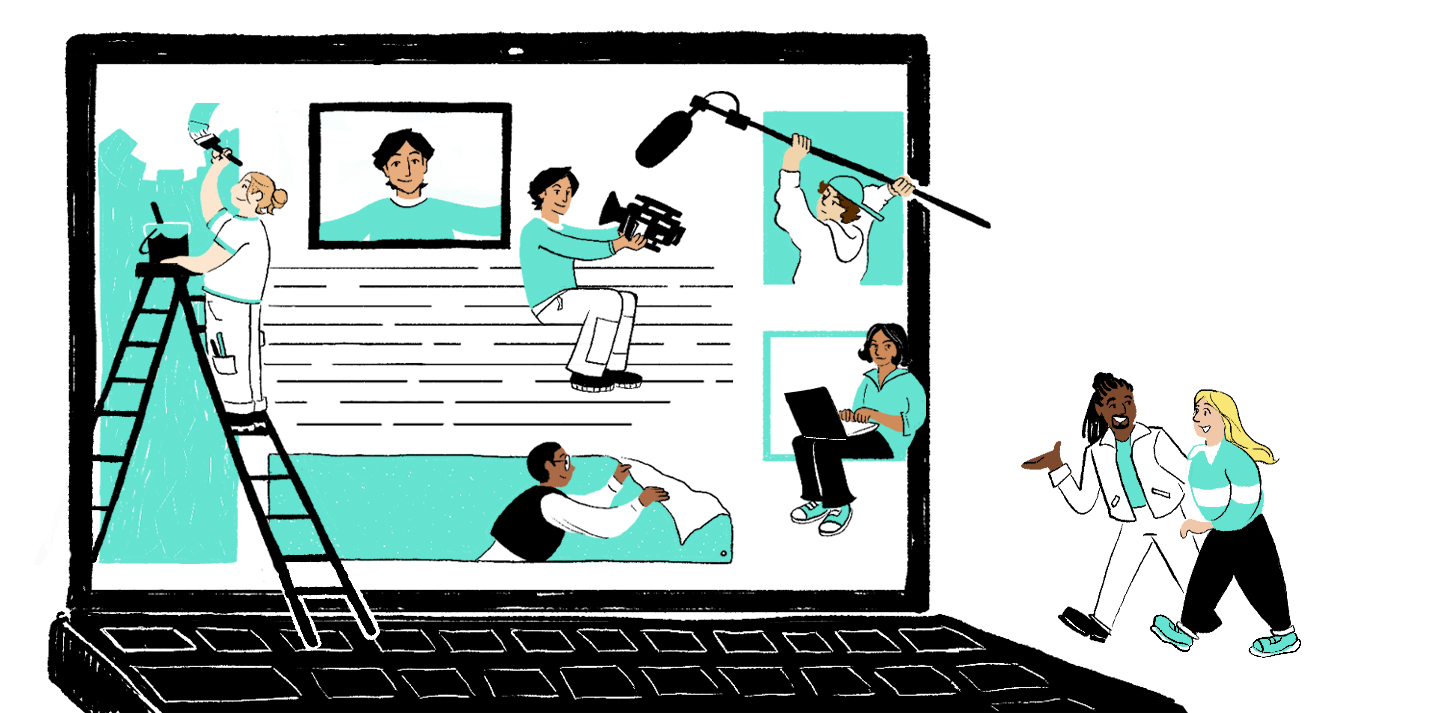
Media buying means purchasing ad space or inventory. Great media-buying plans include aligning your creative and media strategies, so your message and its placement amplify each other.
By Jenny King
DH Associate Vice President, Media Services
We ask a lot of questions at DH, because it helps us understand our clients and their goals. Fortunately, our clients ask great questions, too. When it comes to media buying, the most effective media plans we deliver tend to start with clients willing to dig deeper.
Here are seven questions we like to hear about buying ad space or inventory. They help get us to smarter spending, stronger partnerships, and more strategic campaigns that understand not only what you want to run, but why.
1. What’s the greatest media-buying value you provide?
Sometimes clients come to us expecting basic media placement. Instead, they get better media strategy.
Media buying at DH is deeply connected to our research and creative and behavior-change strategies. From the start, we integrate clients’ goals into what we say, how we say it, and where we say it. More than delivering impressions, we buy media as part of a bigger plan to drive outcomes:
We research your audience — who they are, where they spend time — before spending money.
We align our creative and media plans so your message and placement amplify each other.
We build and protect trusted relationships with global platforms (Disney, Amazon) and hyperlocal partners and trusted community outlets (Rainier Avenue Radio, Tribal Tribune, Seattle Gay News). Read more about the power of community media and strong media partnerships.
2. Where do I start? How much should I spend?
To help you decide, we start by understanding your audience, the action you want them to take, and the change you want to create. From there, we build a media mix that fits your audience and your goals, whether you’re launching something new or laying the groundwork for a long-term effort.
We usually start with a feasibility plan. Think of it as a math problem with multiple variables and more than one right way to solve it. We define how many people are in your priority audience, determine how many times they need to see your message before they take action (often three to seven times), and work backward to see what kind of investment will get you there based on going rates for different tactics.
Along the way, we compare costs across channels, flag trade-offs and look for smart ways to test, learn and grow. To get the most out of your media budget, we might:
Focus on high-priority audience segments.
Start small with test markets or pilot efforts.
Build on what’s worked before.
Spread your budget over time or use lower-cost tactics that deliver a big splash.
Not sure how your budget stacks up? That’s OK. We’ll help you find the right balance, whether you need broad reach or a focused, niche approach.
3. How will I know if my media strategy is working?
Success looks different for everyone. We work with clients to clarify the metrics that matter to them, based on the outcomes they want to create.
Sometimes that’s conversions. Sometimes it’s a lift in awareness. Sometimes it’s a shift in perception or behavior that takes time. We help clients create a dashboard or measurement tool that helps you track the data you need to make more informed decisions.
To find the metrics that matter most, we:
Connect basic media numbers like impressions, clicks, views or completion rates back to your goals.
Use tracking tools and unique links to see how digital content performs.
Partner with our strategy team to add context and insights, especially for behavior change campaigns.
Team up with our researchers to build reports using their tested methods and tools like pre and post surveys or focus group data.
4. Are there overlooked or emerging channels that fit my audience?
That depends on who you’re trying to reach and what you want them to do.
We don’t chase trends. We chase outcomes. That might mean buying ads on WhatsApp or Snapchat, using an influencer on TikTok, or going deep into Subreddits. It also could mean placing print ads in trusted local newspapers, buying out-of-home placements near community hubs, or airing radio spots during a daily commute.
Our advice: Let your audience guide your media mix, not the latest buzz. And stay open to pairing newer platforms with proven performers.
5. How do we measure impact when our tactics aren’t digital?
Not all media is trackable, but it can still be effective. Measurement isn’t just about dashboards. It’s about listening, comparing and designing campaigns that leave a measurable trace, even when clicks aren’t part of the story.
To measure ad performance on traditional or community-based channels, we use:
QR codes or vanity URLs to create digital bridges to website visits.
Changes in search or website visits. If more people start searching for your brand or visiting your site after an ad runs, that’s a signal it’s working.
Surveys before and after a campaign. We ask people if they’ve seen the message, remember it or feel differently about the brand or issue.
Independent research partners. When the budget allows, we can bring in outside experts to measure results.
Community feedback and social listening. We watch conversations and listen to what people are saying to understand how the campaign is landing.
6. How important is past performance when I’m planning a new media buy?
Past media campaign performance gives us a strong starting point, but it’s not the only input we use. If your audience or goals haven’t changed, past data can inform our channel selection, frequency (the number of times our ads need to appear for our audience to act), and even creative. But if your objectives have shifted, we’ll evaluate whether those same tactics still make sense.
We treat past performance as information, not a prescription. The world and media landscape move quickly. Smart media buying and planning means honoring what worked and being willing to shift when we need to.
7. Are there new or creative ways to use familiar channels?
Some of the most effective placements come from reimagining what already exists. We’ve helped clients reimagine:
Radio. We’ve reshaped standard radio spots into story-driven segments that sound more like a podcast, keeping listeners engaged longer.
Social media. We’ve layered quick, first-person, user-generated TikTok videos into larger campaign concepts to make messages feel personal and authentic to the platform.
Print ads. We’ve used clear calls to action, like website links or QR codes, to move readers online.
Out of home media. We’ve transformed a staircase into an immersive directional guide to the next trailhead in a campaign for Trailhead Direct. Check out “Next stop: The great outdoors.”
You don’t always need a brand-new platform to stand out.
It always helps to ask.
Media buying isn’t just about placement. It’s about purpose. When you bring thoughtful questions, it opens space for media strategy, creativity and trust. If you’re wondering what to ask next to create a more effective media plan, we’d love to help.